
July 22, 2026
VerityLoft may earn a commission if you click through and buy through our links, including our Weblium link and our B12 link. This does not change our reviews, our scores, or our independence.
In short:
- The one-line answer: Weblium tailors your shopfront; B12 staffs your front desk. Pick the job your firm actually needs done.
- Scores: both earn 4 out of 5 from our live builds, for different reasons.
- Choose Weblium if: you want a sharp, mobile-ready site for roughly $99 a year and already handle booking elsewhere.
- Choose B12 if: you want scheduling, intake, e-signature, and invoicing bundled into one login.
- Price gap: Weblium’s Pro runs $8.25 a month; B12’s client tier lands at $78 a month once the intro ends.
Most comparisons pit two near-identical builders against each other. These two are not that. One dresses your firm a smart-looking website; the other runs a working client desk behind it. So the real question is not which is “better”, but which job your firm needs done this month.
We built a live site on each platform, using the same fictional CPA firm both times. Below is what those builds showed, side by side, so your firm can choose with open eyes. Try Weblium here, or start a B12 draft here.
Weblium vs B12: The Quick Answer

Both platforms earned 4 out of 5 in our reviews, yet they win on opposite strengths. Weblium takes the prize for price and design calm, since it builds a polished site for a fraction of the cost. B12, meanwhile, takes it for bundled client tools, because scheduling, intake, and signatures all ship in one place. In short, a price-led firm leans Weblium, while a firm that wants a full pipeline leans B12.
What Are Weblium and B12, in One Line Each?
Weblium is a template-based website builder that leans on global styling to make a clean site fast. You pick a layout, restyle it in a click, and launch with a checklist at your side. B12, by contrast, is an AI builder for professional services that drafts your whole site in about a minute. It then layers scheduling, intake, contracts, and invoicing on top. One is a design tool; the other is a client platform with a website attached.
How Does Each One Build Your Site?
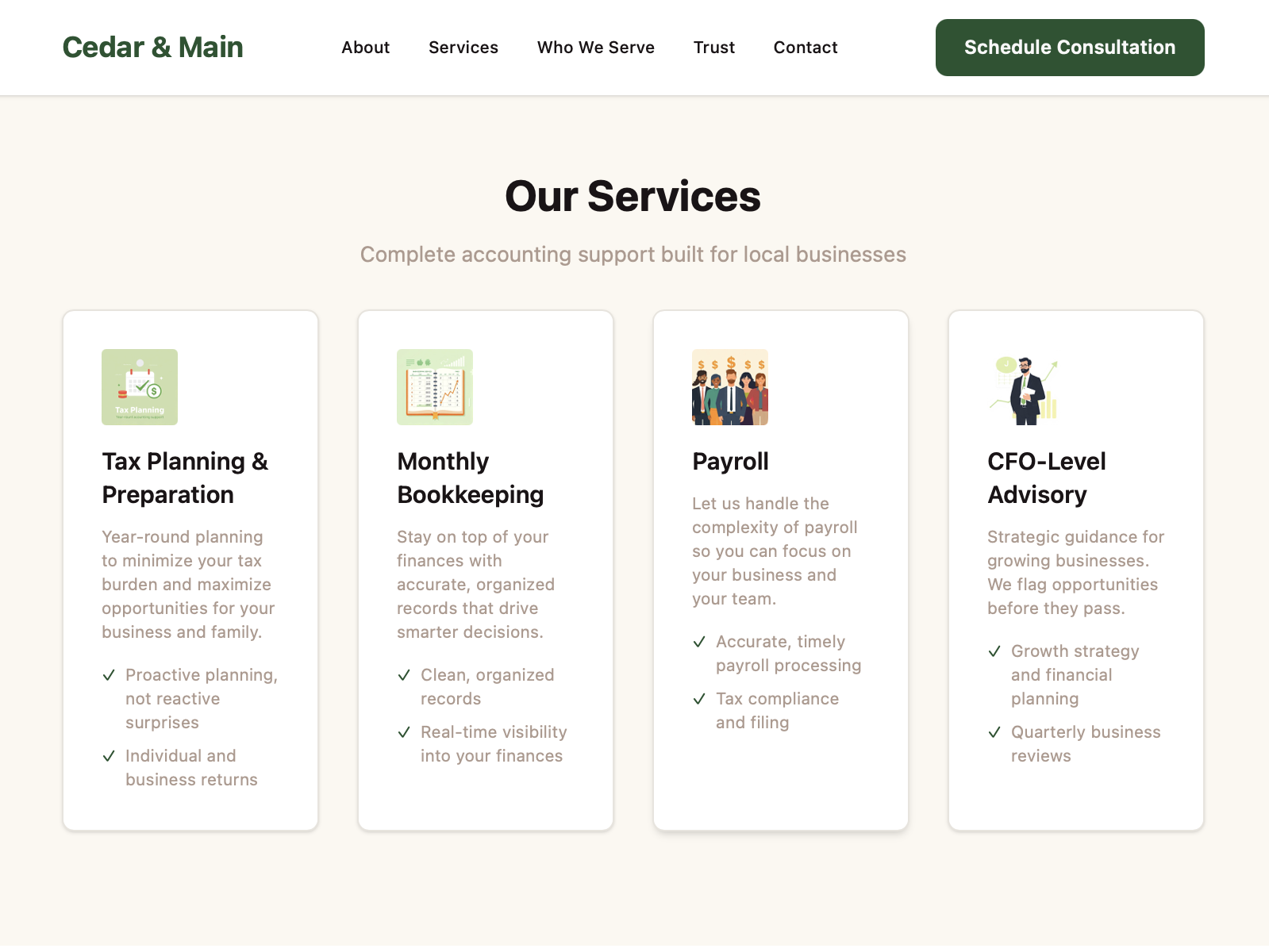
The building method is the first big fork. B12 drafts a full site from a short description, so your firm starts with pages already written. Weblium starts you from a template instead, then hands you fast, global controls for colour and type. Both handled our Cedar & Main build without hand-holding, and both produced a clean, professional first draft.
Templates are worth a note here. Weblium offered just one layout aimed at accountants, plus about seventeen legal and finance designs to borrow from. B12 skips templates entirely, since its AI generates the layout for you. As a result, B12 feels faster to a blank-page starter, while Weblium gives a designer’s hand more to grab.
Which Is Easier to Use?
Ease looks different on each platform, though neither needs code. Weblium felt intuitive from the first screen, and its global styling made brand changes quick. B12 leans on an AI chat editor, so you often describe a change in words and watch it happen. Tutorials exist on both, yet we rarely needed them either time.
Specificity is the shared lever. Tell B12’s AI exactly what your firm does and who it serves, or the copy drifts toward generic filler. Give Weblium a clear colour scheme up front, meanwhile, and its global controls repay you instantly. So both reward a firm that arrives with a plan.
What Client Tools Come Built In?
This is where the two part ways for good. B12 bundles a genuine client desk, since scheduling, intake, a contact manager, e-signature contracts, and invoicing all arrive on its higher plan. A new client can find your firm, book a call, sign the engagement letter, and upload last year’s return without leaving the site. Weblium offers none of that, because it is a website builder, not a client platform.
That gap is the heart of the choice. Should your firm already run its booking and signatures elsewhere, Weblium’s missing desk costs you nothing. If you would rather replace four subscriptions with one login, however, B12 does exactly that.
How Much Does Each One Cost?
Price is the other headline, and the two sit far apart. Here are the plans, taken from each vendor’s official pricing page.
| Weblium | B12 | |
|---|---|---|
| Free plan | Yes, branded subdomain | Yes, subdomain, 30 AI credits a month |
| Entry paid | $8.25/mo annual ($15 monthly) | $49/mo, after $1/mo for three months |
| Full/client tier | Bundles from $297/yr for five sites | $78/mo Website + Client Engagement |
| Free domain | Year one on annual Pro | Year one on paid plans, via IONOS |
| Trial safety net | 14-day free Pro + 14-day money-back | Free plan and a $1 intro window |
| AI metering | None; flat pricing | Credits drawn down per AI action |
The takeaway is plain. Weblium is far cheaper for a single site, at roughly $99 a year. B12 costs more, yet that fee buys a client pipeline your firm would otherwise assemble from four tools. So compare on value, not just the sticker.
Which Is More Secure for Client Data?

Both platforms cover the basics your firm needs. Each site ships with SSL, so the padlock shows for every visitor. B12 adds client file uploads and e-signature, which beats loose email attachments during tax season. Weblium counters with site backups on its paid tier, so a bad edit never wipes your work. Neither one, of course, replaces your own compliance obligations.
Weblium vs B12: The Side-by-Side
| Feature | Weblium | B12 |
|---|---|---|
| How the site is made | Template plus global tailoring | AI drafts the full site in about a minute |
| Accountant templates | One, plus ~17 legal and finance | None; the AI generates the layout |
| Editor style | Intuitive visual editor | AI chat editor |
| Scheduling and booking | Not built in | Built in on the higher plan |
| Client intake | Not built in | Built in |
| E-signature contracts | Not built in | Built in |
| Invoicing | Not built in | Built in |
| Mobile layouts | Automatic | Automatic |
| App or plugin store | Thin | None; a walled garden |
| Cheapest paid price | ~$8.25 a month | $49–$78 a month after intro |
| Our score | 4 out of 5 | 4 out of 5 |
Pros and Cons of Each
| Strengths | Weaknesses | |
|---|---|---|
| Weblium | Cheap, intuitive, global styling, automatic mobile | One accountant template, no client tools, thin app library |
| B12 | Bundled client desk, AI drafts, painless domains | Pricier, metered AI credits, generic copy without a brief |
Which Should Your Accounting Firm Choose?
The decision comes down to one question: does your firm need a website, or a front desk? A solo accountant who just wants a sharp, cheap site should lean Weblium, especially with booking handled elsewhere. Meanwhile, a growing practice that wants clients to book, sign, and pay in one place should lean B12 instead. Firms with strict IT rules or custom portals may outgrow both, so weigh that early. If a greener build appeals as a third path, read our Create.net review before you commit.
The Verdict
Two platforms, two honest 4-out-of-5 scores, one clear split. Weblium wins for price, design calm, and a firm that only needs a smart website. B12 wins for the bundled client desk that would otherwise take four tools to build. Weighing everything our two builds showed us, we would send a budget-led solo firm to Weblium and a pipeline-hungry practice to B12. Either way, your firm can test the fit for almost nothing. Start a Weblium build or generate a B12 draft and judge the output yourself.
Frequently Asked Questions
Is Weblium or B12 better for accounting firms? Neither wins outright, because they solve different problems for your firm. Weblium builds a cheaper, sharper website, while B12 bundles the booking and signature tools a growing practice wants.
Which one is cheaper? Weblium is far cheaper for a single site, at about $8.25 a month billed annually. B12 starts at $49 a month and reaches $78 for its client tier once the intro period ends.
Does either builder include client scheduling and e-signature? B12 bundles scheduling, intake, e-signature, and invoicing on its higher plan. Weblium includes none of these, since it is a pure website builder rather than a client platform.
Can I try both before paying? You can, and we did exactly that during testing. Weblium offers a free plan and a two-week Pro trial, while B12 offers a free plan and a $1 intro window.
Which is easier for someone with no tech skills? B12 feels faster from a blank page, because its AI writes the first draft for you. Weblium feels calmer to edit, thanks to intuitive controls and global styling.
Do both give me a free domain? Both include one custom domain free for the first year on their paid plans. Weblium registers it directly, while B12 registers yours through its partner IONOS.
Sources and Further Reading
- How Create.net Turns Your New Website Into a Growing Forest — our hands-on review of a greener website builder.
- FileYourTaxes.com Is the Weirdly Practical Tax Tool From 1995 — the low-cost filing tool worth knowing about.
- Cloudflare vs Porkbun: Which Registrar Is the Better Choice for 2026? — another head-to-head from our desk.
- Weblium Pricing — official plan, trial, and bundle terms.
- B12 Pricing — official plan, credit, and domain terms.
- Weblium on G2 — user ratings for the platform.
- Pixabay — Images other than thumbnail/hero image.